
A LETTER FROM THE FOUNDER
The making is a kind of meditation.
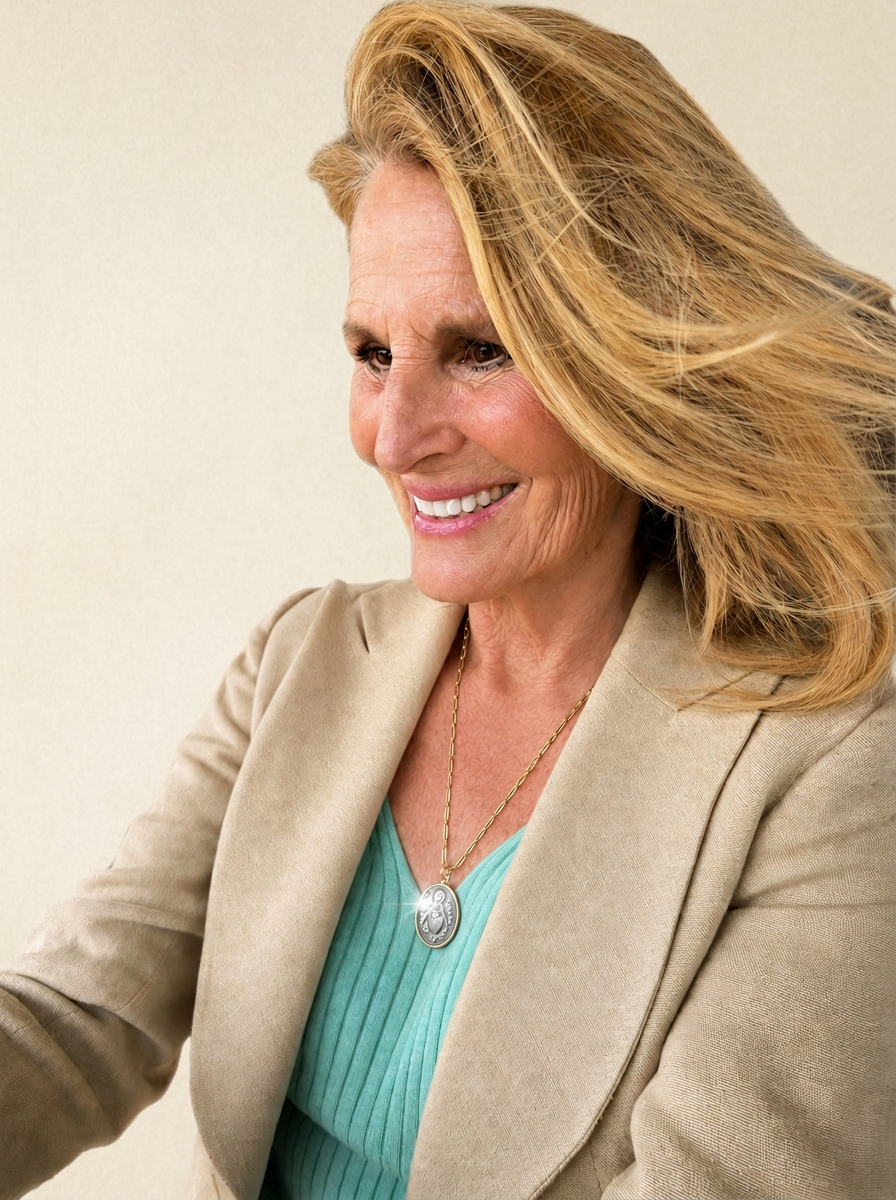
MY SPIRITUAL INHERITANCE
There is so much wisdom in those who have walked before us, and those who walk beside us still. I am grateful to those who have taken the time to communicate the wisdom of these paths — to teach what they were taught, to translate what was given to them.
Creating the jewelry is a kind of meditation for me — an attempt to express the truth each tradition holds, in a form that can be worn and kept.
I have come to these traditions in three ways — as a student, reading the teachers and sitting with the teachings; as a pilgrim, traveling to the sacred places where each tradition was born or carried; and through my own life, where the lessons of these traditions have met the questions I could not answer alone. Most of the artifacts at the heart of these pieces I have gathered myself, on journeys to sacred places in Thailand, in Europe, in the small grottoes and temples where centuries of prayer still seem to gather in the air. What I have learned, returning from each of these journeys, is that the messages are similar. Every wisdom tradition, in its own language, points toward the same thing — and every tradition seeks its inspiration in nature. Genuine presence in nature becomes the metaphor for the truth the tradition holds.
In my own life, presence in nature is essential. It grounds me and lifts me. My jewelry is a small attempt to translate what I have learned — my spiritual inheritance — in a form that can be carried close.
— KATHLEEN SCHERER SYNNOTT
Every tradition seeks its inspiration in nature.
SAINTE-TERRE · SACRED GROUND
The Grove at Kauai.
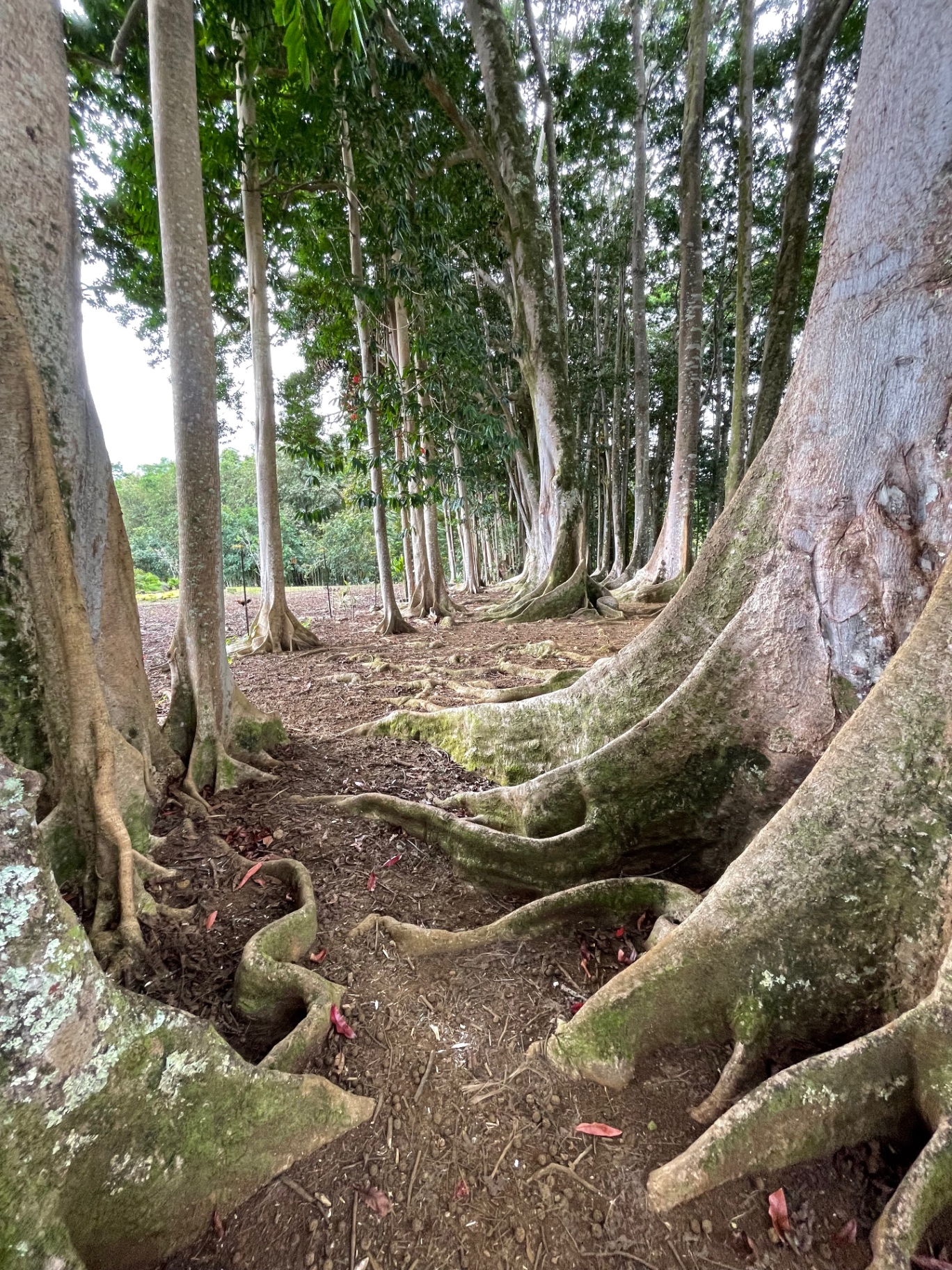
On the eastern shore of the island of Kauai, set into the green of the Wailua River valley, there is a Hindu monastery that few outside the Shaivite world have heard of. Kauai's Hindu Monastery — the seat of the Saiva Siddhanta Church — was founded in 1970 and has, over the decades, cultivated the most significant rudraksha grove outside of South Asia. The trees grow tall and steady in the volcanic soil. Beneath them, the seeds fall.
The rudraksha is known in the Hindu tradition as a tear of Shiva — wept, after long meditation, for the suffering of the world. In the Buddhist tradition, the same seed is read as a tear of the bodhisattva, fallen to the earth where it took root. Across both lineages, the meaning holds: compassion that became something the living could carry.
I went to Kauai not knowing what I was looking for. I found the grove. I stood beneath one of the trees, and the seeds were on the ground around my feet — small, ridged, dark as old wood. I gathered them by hand, one by one. Each rudraksha seed in the Sainte-Terre collection comes from that visit. When the seeds are gone, they are gone.
This is what Sainte-Terre means: sacred ground. Not a brand that admires sacred traditions from a distance, but one that goes to the soil where they grow. The pieces I make are not symbols of devotion in the abstract. They are objects I have stood beside, gathered with my own hands, or sought out in the places where they were first held sacred. To wear one is to be linked, however quietly, to the ground it came from.
The Buddha with Rudraksha pairs the seed with a small Buddha in royal blue enamel, set in 18k gold, rendered in the earth-touching mudra — the gesture of the night of awakening, when the Buddha called the ground itself to bear witness to his life. The witness, and the tear. The seeing, and the compassion that follows from having seen.
"I went to the woods because I wished to live deliberately, to front only the essential facts of life, and see if I could not learn what it had to teach, and not, when I came to die, discover that I had not lived."
— HENRY DAVID THOREAU